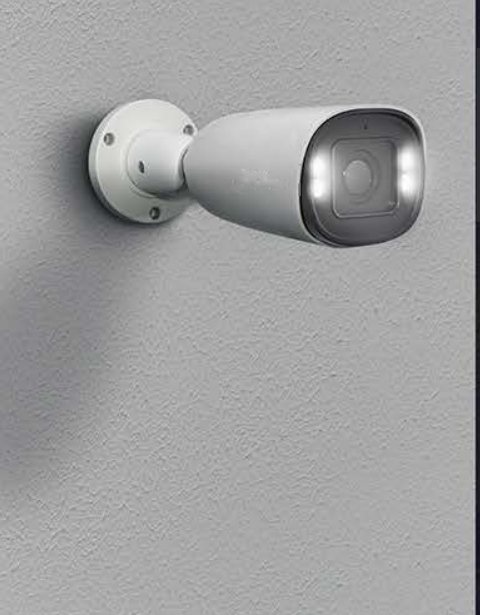
Almost every CCTV quote in India today offers one of two systems: IP cameras with an NVR or HD analog cameras with a DVR. Both record clear video and both can be watched on a mobile phone. The difference is in how the cameras connect, how far the system can grow and what it costs to install. This guide explains the choice in plain terms.
How the two systems work
- HD analog (DVR): each camera sends video over coaxial cable to a Digital Video Recorder. Power usually runs on a separate cable or a combined coax-plus-power cable. The DVR converts the signal into digital video and saves it on a hard disk.
- IP (NVR): each camera is a small network device. It compresses its own video and sends it over a network (Cat6) cable to a Network Video Recorder. With PoE (Power over Ethernet), the same cable also powers the camera.
Picture quality
Modern HD analog cameras commonly go up to 5 MP, and some to 8 MP. IP cameras are available from 2 MP up to 4K (8 MP) and higher. For a normal corridor or small room, a good 2 MP camera of either type is usually enough. When you need to read number plates, identify faces at an entrance, or cover a wide warehouse with one camera, IP cameras give more room to grow in resolution and lens options.
Cabling and distance
Coaxial cable can run long distances without extra equipment, which makes analog convenient for older buildings that already have coax laid. A single network cable run is normally limited to about 100 metres; longer runs need a switch in between or fibre. On the other hand, IP cameras can share existing network switches and fibre links, so a large campus with several buildings is often easier to connect with IP.
Smart features
Features such as face detection, line crossing, intrusion alerts, people counting and number plate recognition work best on IP cameras, because the processing happens inside the camera. Some analog DVRs now offer basic motion and human/vehicle detection, which is enough for many small sites. If you want CCTV to link with access control, boom barriers or an ANPR parking system, IP is the more flexible route.
Storage
Higher resolution means larger files. A system of 4 MP IP cameras needs more hard disk space than the same number of 2 MP analog cameras for the same number of days. H.265 compression reduces this considerably on both types. Use our CCTV storage guide to estimate how many terabytes you need for 15, 30 or 90 days of recording.
Cost
For a small shop, home or office with 4 to 8 cameras, an HD analog system is usually the lower-cost option, and it is easy to maintain. The price gap between analog and entry-level IP cameras has narrowed, so for new installations of 16 cameras or more, IP often costs only a little more and gives better long-term value. The final price depends mainly on camera resolution, brand, cable length, recorder channels and hard disk size, so compare quotes on the same specification.
Quick comparison
| Point | HD analog + DVR | IP + NVR |
|---|---|---|
| Cable | Coaxial + power | Single Cat6 with PoE |
| Resolution | Mostly 2 to 5 MP | 2 MP to 4K and above |
| Smart analytics | Basic | Advanced |
| Upgrade path | Limited | Easy to expand |
| Upfront cost (small sites) | Lower | Slightly higher |
| Best for | Shops, homes, small offices, existing coax | Corporate offices, factories, campuses, parking |
What about mixing both?
Many DVRs are “hybrid” or “XVR” models that accept a few IP cameras as well as analog ones. This is a practical way to upgrade an old system step by step: keep the working analog cameras and add IP cameras at the main gate, reception and parking where detail matters most.
Security and compliance
Any camera or recorder connected to the internet should be protected. Change default passwords, keep firmware updated, use a separate network or VLAN for cameras if possible, and give remote-view access only to the people who need it. CCTV cameras sold in India now also have to meet government testing and certification rules, so ask your supplier to confirm the model you are buying is compliant.
Checklist before you order
- Number of cameras now and in the next two to three years
- Places where you need to identify faces or read number plates
- Existing cabling: coax, network cable or none
- Days of recording required and hard disk size
- Mobile viewing, alerts and link with access control or parking
- Warranty, certification and AMC support
Our engineers can visit your site in Gurugram or Delhi NCR, check the existing cabling and suggest whether IP, analog or a hybrid CCTV system fits your budget.
Our engineers can visit your site and recommend the right option. Call +91 97119 00801 or request a quote.