What an access control system does
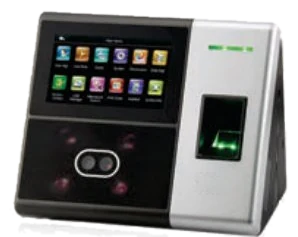
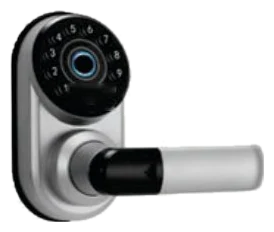
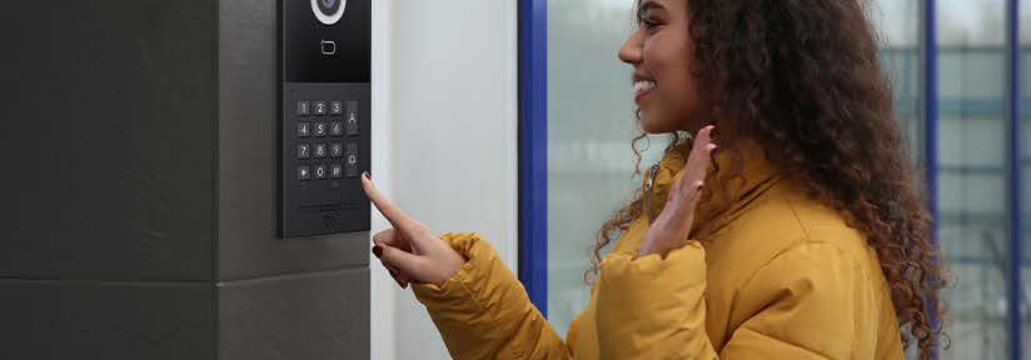
An access control system decides who can open which door, and when. Each controlled door has a reader (card, PIN, fingerprint, face or QR code), an electric lock and an exit button; a controller checks every credential against the list of permitted users and keeps a record of who went where and at what time. How the parts fit together, standalone vs networked systems and the main reader types are on our access control system page, and our access control buying guide lists the questions to settle before you order.
Where we install access control in Delhi
- Offices in Connaught Place, Nehru Place, Jasola, Saket, Okhla Phase 3, Janakpuri and Netaji Subhash Place: the main office door, server and record rooms, cash and accounts rooms and the director’s cabin. Where the building lobby already has flap barriers or tripod turnstiles, we check whether the office readers can use the same cards.
- Government offices and PSUs: record rooms, server rooms, strong rooms and officer floors, usually bought through GeM or a tender (see below).
- Hospitals, clinics and labs: pharmacy and drug stores, ICU and OT staff doors, sample and record rooms, where only named staff should enter and every entry must be on record.
- Schools and coaching institutes: staff rooms, exam and question-paper rooms, the server room and the main gate for staff, often linked to attendance.
- Factories and warehouses in Okhla Phase 1 and 2, Naraina, Mayapuri, Wazirpur, Badli and Bawana: finished goods and raw material stores, tool rooms and dispatch areas, with visitors handled at the gate through a visitor management system.
Older buildings and shared office blocks
Many Delhi offices sit in older commercial buildings in Connaught Place, Nehru Place, Karol Bagh and the industrial areas, or in one floor of a shared block. These points decide what we fit:
- Door type. Heavy wooden doors and old metal shutters often cannot take a standard glass-door EM lock bracket. We check each frame and choose an EM lock with the right bracket, an electric bolt or a drop bolt.
- Cable route. Where walls cannot be cut, we run the cable in surface PVC conduit or casing along the ceiling, and place the controller in a locked box near the doors to keep runs short.
- Shared lobbies. If the building has a common main door controlled by the landlord or society, we only control your own doors and keep the building’s fire exit and lift routes untouched.
- Power. Older buildings see voltage drops and cuts. Controllers and locks should run on a UPS or a dedicated backup supply so doors neither fail open nor stay locked.
- Fire exits. Doors on escape routes must open from inside with an exit button and a break-glass release, and unlock when the fire alarm triggers. We wire and test this at handover.
Buying through GeM or a tender
Government offices, PSUs, hospitals and institutes in Delhi usually buy access control through GeM or an open tender. The specification decides what is actually supplied, so it helps to write down:
- the number of doors, the door types and whether each is a fire exit;
- the credential at each door (card, PIN, fingerprint, face) and how many users each reader and controller must hold;
- standalone readers or networked controllers on one software, and where the server or PC will sit;
- whether entry records must also give attendance reports, and how long the logs must be kept;
- fire alarm release, UPS backup, cabling and conduit, installation, training and the AMC period.
We can help you prepare this list from a site survey and quote against the GeM or tender specification.
Choosing readers, controllers and locks
- Credential. RFID cards (EM or Mifare) are cheapest and quickest to issue; fingerprint suits small, stable teams; face recognition is touch-free and stops card sharing; QR codes suit visitors.
- Controller. For one door a standalone reader is often enough. For several doors on one software, networked controllers such as the ZKTeco C3 Plus series (card, PIN and QR) or the InBio Pro Plus series (adds fingerprint and face readers) control 1, 2 or 4 doors per board.
- Several branches. If you have offices in more than one part of Delhi or NCR, networked controllers at each branch can be managed from one software over your network, so one admin adds and removes users everywhere.
Access control price in Delhi (November 2026)
Prices below are from our own access control price list, supply only, excluding 18% GST, as of November 2026:
- ZKTeco C3-100 Plus 1-door controller with box and power supply: ₹12,300; C3-200 Plus 2-door: ₹17,500; C3-400 Plus 4-door: ₹20,000.
- ZKTeco InBio260 Pro Plus 2-door biometric controller with box and power supply: ₹23,600; InBio460 Pro Plus 4-door: ₹25,500.
- Reader at each door: card or PIN ₹2,900–3,500, fingerprint and card ₹4,600–7,500, face recognition ₹11,000–15,400.
- Door hardware per door (EM lock, exit button, power supply): ₹2,900–4,800. Installation, testing and commissioning: ₹300 per door.
Example: an 8-door office or record-room floor with fingerprint and card readers (two InBio460 Pro Plus controllers with box, eight fingerprint readers, eight EM lock sets and installation) comes to about ₹1,13,400–1,51,800 plus GST. Cabling and conduit depend on the distance from the controllers to each door and are quoted after the site survey. Model-wise prices for the city are on our access control price in Delhi page.
Points we check at a Delhi site
- Work permits and timings. Office towers, hospitals and government buildings often allow work only at fixed hours or on weekends. We plan the installation around them.
- Network. Networked controllers need a LAN point and an IP address from your IT team; we agree this before installation.
- Existing system. If you already have readers or locks from another vendor, we check what can be reused and take over the AMC after an inspection.
Supply, installation and AMC in Delhi
We survey the doors, supply genuine ZKTeco and eSSL hardware with manufacturer warranty, install and programme the system, enrol users, train your admin or facility team and maintain it under AMC. For other systems in the city see security systems in Delhi, including boom barriers in Delhi for the vehicle gate. We also cover access control in Gurugram and access control in Noida.
Get a quotation
Call or WhatsApp +91 97119 00801 (WhatsApp) with the number of doors, the door type (glass, wooden or metal), the credential you prefer and whether you need attendance or multi-branch integration, or use our contact page.
Questions from Delhi buyers
Do you install access control systems in Delhi?
Yes. We supply, install and maintain access control for offices, government offices and PSUs, hospitals, schools and factories across Delhi, including Connaught Place, Nehru Place, Jasola, Saket, Okhla, Naraina, Mayapuri and Wazirpur.
What does an 8-door access control system cost in Delhi?
With fingerprint and card readers, two InBio460 Pro Plus controllers, eight readers, eight EM lock sets and installation come to roughly Rs 1,13,400 to 1,51,800 plus GST at our November 2026 prices. Card-only readers bring it down. Cabling is quoted after the survey.
Can you fit access control on old wooden or metal doors?
Usually yes. We check each door frame and choose an EM lock with the right bracket, an electric bolt or a drop bolt, and run the cable in surface conduit where the walls cannot be cut.
Can you quote against a GeM or tender specification?
Yes. We can survey the site, help you list the doors, credentials, user capacity, software and AMC needed, and quote against the GeM or tender specification.
Will the doors open during a fire alarm or power cut?
Doors on escape routes are wired to the fire alarm panel so they unlock on an alarm, and we choose fail-safe locks for exit doors and a UPS for the controllers. We test this with your facility team at handover.
Call +91 97119 00801, message us on WhatsApp or request a quote. We will plan a site survey and send a written quotation.