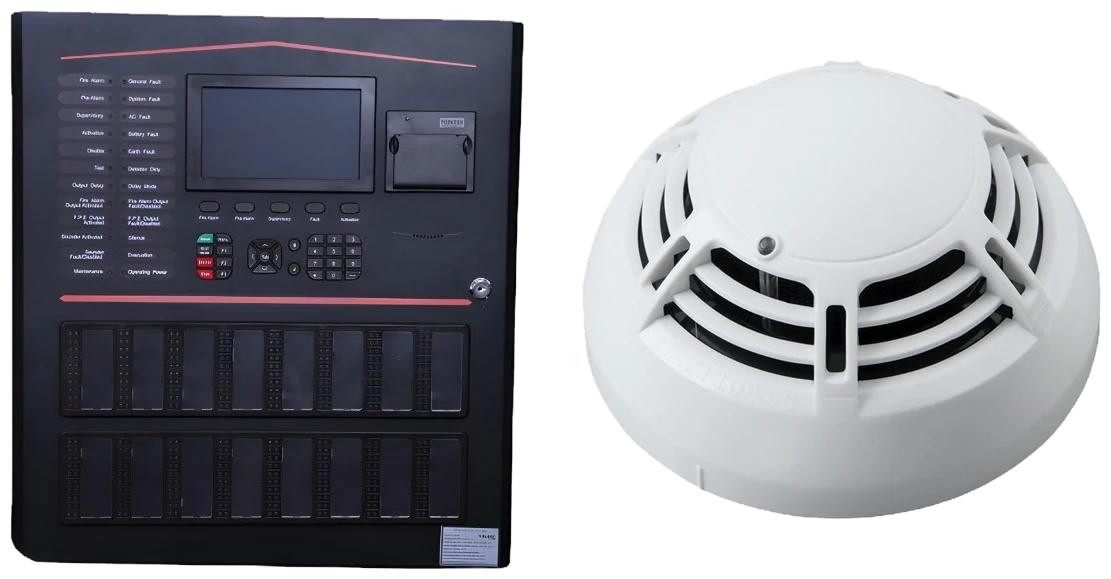
Both conventional and addressable fire alarm systems detect smoke or heat, sound hooters and help people get out. The difference is how precisely the panel tells you where the fire is, how the system is wired, and how easy it is to find faults. The right choice depends mainly on the size of your building and how quickly your staff must reach the exact spot.
What is a conventional fire alarm system?
In a conventional system the building is divided into zones, for example one zone per floor or per wing. Each zone has its own pair of wires running from the panel, and all detectors and manual call points in that zone sit on it. When any device in the zone goes into alarm, the panel lights up that zone, for example “Zone 3 – Second floor”, but it cannot say which room.
- Best for: small offices, shops, showrooms, small schools, clinics and small factories, typically with a handful of zones.
- Strengths: lower cost of panel and detectors, simple to operate, simple to explain to the guard.
- Limits: staff must search the whole zone to find the device; more cable on large sites because every zone needs its own run; fault finding is slower.
What is an addressable fire alarm system?
In an addressable system every detector, call point, sounder and interface module has its own address on a loop. The panel talks to each device, so when one goes into alarm it shows the exact device and the location text you programmed, for example “Third floor, Room 305, smoke detector”. The loop runs out from the panel and back again, so a single cable break does not cut off the devices beyond it.
- Best for: hospitals, hotels, malls, office towers, large schools and colleges, warehouses and large factories – anywhere with many rooms or floors.
- Strengths: exact location of the alarm, fewer cables on large sites, each device reports its own faults (dirty detector, removed head, open circuit), event history in the panel, easier links to lifts, HVAC, access control and the PA system.
- Limits: higher cost per device and for the panel; needs proper programming and documentation at handover.
Addressable vs conventional at a glance
| Location shown | Conventional: zone only. Addressable: exact device and room. |
|---|---|
| Wiring | Conventional: one circuit per zone. Addressable: loops that can carry many devices. |
| Fault finding | Conventional: by zone, then device by device. Addressable: panel names the faulty device. |
| Cost | Conventional: lower for small sites. Addressable: higher per device, but cabling and labour can be lower on big buildings. |
| Typical building | Conventional: small office, shop, clinic, small factory. Addressable: hospital, hotel, mall, tower, large plant. |
What decides the cost
- Number of devices: smoke, heat and multi-sensor detectors, manual call points, hooters and flashers, decided by the floor plan and room use.
- Panel size: zones (conventional) or loops and device capacity (addressable), plus spare capacity for future floors.
- Cable: fire-rated cable length and the route (false ceiling, conduit, risers).
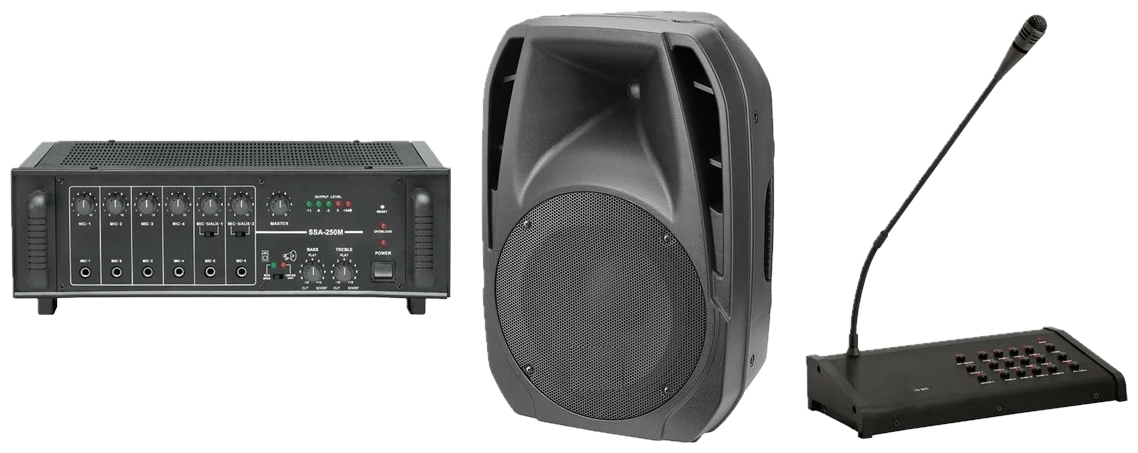
- Integration: modules to release access-controlled doors, recall lifts, stop AHUs and trigger evacuation messages on the PA system.
- Testing, drawings and AMC: commissioning, as-built drawings for the fire NOC file, and regular maintenance.
We do not publish a fixed price because these items change from site to site; we send an itemised quotation after the survey. See our fire alarm system page for what we supply.
Which should you choose?
- A single shop, small office or clinic: a conventional system is usually enough and costs less.
- Several floors, many rooms or people who sleep on site (hospital, hotel, hostel): choose addressable, so staff go straight to the right room.
- Plans to add floors or link to lifts, access control and PA: addressable is easier to grow and integrate.
- Fire NOC: whichever you choose, the layout, cable and testing must meet the requirements applied to your building; our guide on fire alarm for fire NOC in Gurugram covers the paperwork side.
Keep it maintained
Detectors collect dust, batteries in the panel age, and devices get covered or removed during interior work. Test the system on a fixed schedule, clean or replace detectors as needed, check the standby batteries and keep the event log. Mapple Infocom installs and maintains conventional and addressable fire alarm systems across Gurugram and Delhi NCR under AMC.
Frequently asked questions
What is the main difference between addressable and conventional fire alarm?
A conventional system shows only the zone in alarm; an addressable system shows the exact detector or call point and its location, because every device has its own address on a loop.
Is addressable fire alarm more expensive?
Per device and panel, yes. On large buildings the lower cable and labour cost and faster fault finding often make addressable the better value; on small sites conventional usually costs less overall.
Which fire alarm is best for a hospital or hotel?
Addressable, because staff must reach the exact room quickly and the system can be linked to lifts, doors and the PA system.
Can a conventional system be upgraded to addressable?
Usually the panel and detectors are replaced, and existing cable is checked to see whether it can be reused for the loop. We assess this at the site survey.
Our engineers can visit your site and recommend the right option. Call +91 97119 00801 or request a quote.