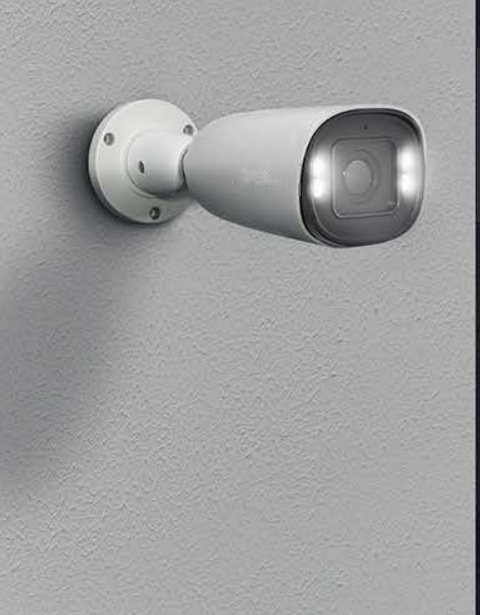
Almost every CCTV quote in India today offers one of two systems: IP cameras with an NVR or HD analog cameras with a DVR. Both record clear video and both can be watched on a mobile phone. The difference is in how the cameras connect, how far the system can grow and what it costs to install. This guide explains the choice in plain terms.
How the two systems work
- HD analog (DVR): each camera sends video over coaxial cable to a Digital Video Recorder. Power usually runs on a separate cable or a combined coax-plus-power cable. The DVR converts the signal into digital video and saves it on a hard disk.
- IP (NVR): each camera is a small network device. It compresses its own video and sends it over a network (Cat6) cable to a Network Video Recorder. With PoE (Power over Ethernet), the same cable also powers the camera.
Picture quality
Modern HD analog cameras commonly go up to 5 MP, and some to 8 MP. IP cameras are available from 2 MP up to 4K (8 MP) and higher. For a normal corridor or small room, a good 2 MP camera of either type is usually enough. When you need to read number plates, identify faces at an entrance, or cover a wide warehouse with one camera, IP cameras give more room to grow in resolution and lens options.
Cabling and distance
Coaxial cable can run long distances without extra equipment, which makes analog convenient for older buildings that already have coax laid. A single network cable run is normally limited to about 100 metres; longer runs need a switch in between or fibre. On the other hand, IP cameras can share existing network switches and fibre links, so a large campus with several buildings is often easier to connect with IP.
Smart features
Features such as face detection, line crossing, intrusion alerts, people counting and number plate recognition work best on IP cameras, because the processing happens inside the camera. Some analog DVRs now offer basic motion and human/vehicle detection, which is enough for many small sites. If you want CCTV to link with access control, boom barriers or an ANPR parking system, IP is the more flexible route.
Storage
Higher resolution means larger files. A system of 4 MP IP cameras needs more hard disk space than the same number of 2 MP analog cameras for the same number of days. H.265 compression reduces this considerably on both types. Use our CCTV storage guide to estimate how many terabytes you need for 15, 30 or 90 days of recording.
Cost: analogue HD vs IP CCTV system price
The quickest way to see the real difference is to price the same system both ways. The table below uses one brand (Hikvision, 2 MP cameras, half bullet and half dome) and our own website prices for November 2026, so only the technology changes. Prices are per item, excluding GST.
| Item (Nov 2026, excl. GST) | HD analogue + DVR | IP + NVR |
|---|---|---|
| 2 MP bullet camera (outdoor) | ₹1,190 | ₹2,950 |
| 2 MP dome camera (indoor) | ₹1,150 | ₹2,850 |
| Recorder for 4 cameras | 4-channel DVR ₹2,450 | 8-channel NVR ₹6,600 (smallest Hikvision NVR we list) |
| Recorder for 8 cameras | 8-channel DVR ₹3,800 | 8-channel NVR ₹6,600 |
| Recorder for 16 cameras | 16-channel DVR ₹6,500 | 16-channel NVR ₹7,700 |
Adding the cameras, the recorder, a surveillance hard disk (1 TB ₹2,900 for 4 cameras, 2 TB ₹4,050 for 8, 4 TB ₹7,500 for 16) and installation at ₹300 per camera in Gurugram gives:
| System (equipment + installation, excl. GST) | HD analogue | IP |
|---|---|---|
| 4 cameras | ₹11,230 | ₹22,300 |
| 8 cameras | ₹19,610 | ₹36,250 |
| 16 cameras | ₹37,520 | ₹66,400 |
Not included in either column: cable (coaxial plus power cable for analogue, Cat6 for IP), conduit or casing, connectors, the power supply or PoE switch, a rack and a UPS. These depend on the cable length and the building, so they are quoted after a site survey. For IP, a PoE switch is needed unless the NVR has built-in PoE ports.
What the numbers show
- For the same brand and resolution, an IP system costs roughly 1.8 to 2 times an HD analogue system, mostly because each IP camera costs about two and a half times an analogue camera. The recorder difference matters less as the system grows: at 16 channels the NVR is only ₹1,200 more than the DVR.
- Budget IP cameras narrow the gap. Entry-level IP domes from other brands in our catalogue, such as the CP Plus 2 MP IP dome, cost less than the Hikvision IP models above. See the full CCTV price list to compare.
- Cable can change the answer. If the building already has good coaxial cable, analogue avoids rewiring. In a new office or society, one Cat6 cable per camera with PoE often costs less to lay than coax plus a separate power cable, which reduces the IP premium.
- Pay for IP where it earns its cost: number plates at a boom barrier, faces at a main entrance, wide yards, smart alerts and links with access control. Many sites choose a hybrid XVR: analogue cameras inside and a few IP cameras at the gate.
Prices change often, so check the live CCTV price in Gurugram page or get a quick estimate for your site with the instant price tool.
Analogue HD formats: HD-TVI, HD-CVI and AHD
“Analogue HD” is not one standard. Three formats are in common use: HD-TVI, HD-CVI and AHD, plus the old standard-definition signal (CVBS) from older cameras. All of them send HD video over the same coaxial cable, but a camera and a recorder must understand the same format. Most DVRs sold today are “penta-brid” or XVR models that detect several formats automatically, and many cameras can be switched between formats from a menu or a small switch on the cable. When you buy a camera from one brand and a DVR from another, check that the format matches, or the picture may show as black or in black and white.
How to tell whether your existing cameras are IP or analogue
- Look at the cable at the camera: a round coaxial cable with a twist-lock BNC connector means analogue. A flat or round network cable with an RJ45 plug (like a computer cable) means IP.
- Look at the back of the recorder: a row of BNC sockets means a DVR or XVR (analogue or hybrid). Network ports, often marked PoE, and no BNC sockets mean an NVR (IP only).
- Check the label: the model code on the recorder usually says DVR, XVR or NVR, and the number of channels.
This tells you what you can reuse. If the coaxial cable is in good condition, the cheapest upgrade is often new HD analogue cameras and a new XVR on the same cable.
Three ways to upgrade an old analogue system
- HD analogue on the same coax: replace old cameras with 2 MP or 5 MP HD analogue cameras and the old DVR with an XVR. No new cabling, quick to finish, lowest cost.
- Hybrid: keep the working analogue cameras on an XVR and add a few IP cameras at the main gate, reception or parking, where you need faces or number plates.
- Full IP: pull new Cat6 cable and fit IP cameras on a PoE switch and NVR. Where pulling new cable is hard, an Ethernet-over-coax (EoC) extender can carry an IP camera over the existing coaxial cable.
Cable distance in practice
One Cat6 network cable is limited to about 100 metres between the camera and the switch; beyond that you need another switch on the way, a PoE extender or fibre. HD analogue signals usually travel a few hundred metres on good quality coaxial cable, but the exact figure depends on the format, the resolution and the cable, so check the camera datasheet. For gates and boundary walls far from the control room, plan the cable route before choosing the camera type.
Quick comparison
| Point | HD analog + DVR | IP + NVR |
|---|---|---|
| Cable | Coaxial + power | Single Cat6 with PoE |
| Resolution | Mostly 2 to 5 MP | 2 MP to 4K and above |
| Smart analytics | Basic | Advanced |
| Upgrade path | Limited | Easy to expand |
| Upfront cost (same brand) | Lower | About 1.8 to 2 times (see cost table) |
| Best for | Shops, homes, small offices, existing coax | Corporate offices, factories, campuses, parking |
What about mixing both?
Many DVRs are “hybrid” or “XVR” models that accept a few IP cameras as well as analog ones. This is a practical way to upgrade an old system step by step: keep the working analog cameras and add IP cameras at the main gate, reception and parking where detail matters most.
Security and compliance
Any camera or recorder connected to the internet should be protected. Change default passwords, keep firmware updated, use a separate network or VLAN for cameras if possible, and give remote-view access only to the people who need it. CCTV cameras sold in India now also have to meet government testing and certification rules, so ask your supplier to confirm the model you are buying is compliant.
Checklist before you order
- Number of cameras now and in the next two to three years
- Places where you need to identify faces or read number plates
- Existing cabling: coax, network cable or none
- Days of recording required and hard disk size
- Mobile viewing, alerts and link with access control or parking
- Warranty, certification and AMC support
Our engineers can visit your site in Gurugram or Delhi NCR, check the existing cabling and suggest whether IP, analog or a hybrid CCTV system fits your budget.
Frequently asked questions
How much does a 4 camera IP CCTV system cost compared with analogue?
With Hikvision 2 MP cameras at our November 2026 prices, a 4 camera HD analogue system with DVR, 1 TB disk and installation in Gurugram comes to about Rs 11,230 and the same system in IP with an NVR to about Rs 22,300, both excluding GST, cable and power accessories. Budget IP brands cost less.
Is an IP camera worth the extra cost?
It is worth it where you need detail or growth: reading number plates, identifying faces at an entrance, covering wide areas, smart alerts, or linking CCTV with access control and parking. For a small shop or flat that only needs a clear record of what happened, HD analogue usually gives better value.
Which is better, analogue HD or IP CCTV?
Neither is better for every site. Analogue HD is usually cheaper and simpler for 4 to 8 cameras and for buildings that already have coaxial cable. IP is better for larger sites, for reading faces and number plates, for smart alerts and for linking CCTV with access control or parking.
Can I connect an IP camera to a DVR?
Only if the recorder is a hybrid (XVR) model with IP channels. A plain DVR records analogue cameras only. Check the recorder datasheet for the number of IP channels it supports.
Can analogue cameras work with an NVR?
Not directly. An NVR records network cameras. Analogue cameras need a DVR or XVR, or a video encoder that turns the analogue signal into a network stream.
Can I watch HD analogue cameras on my mobile?
Yes. The DVR or XVR connects to the internet router and the brand app shows live view and playback, the same way an NVR does for IP cameras.
Do I have to change all cables to move to IP?
No. You can keep the working analogue cameras on a hybrid XVR and add IP cameras where you need more detail, or use Ethernet-over-coax extenders on the existing cable where pulling new Cat6 is difficult.
Our engineers can visit your site and recommend the right option. Call +91 97119 00801 or request a quote.