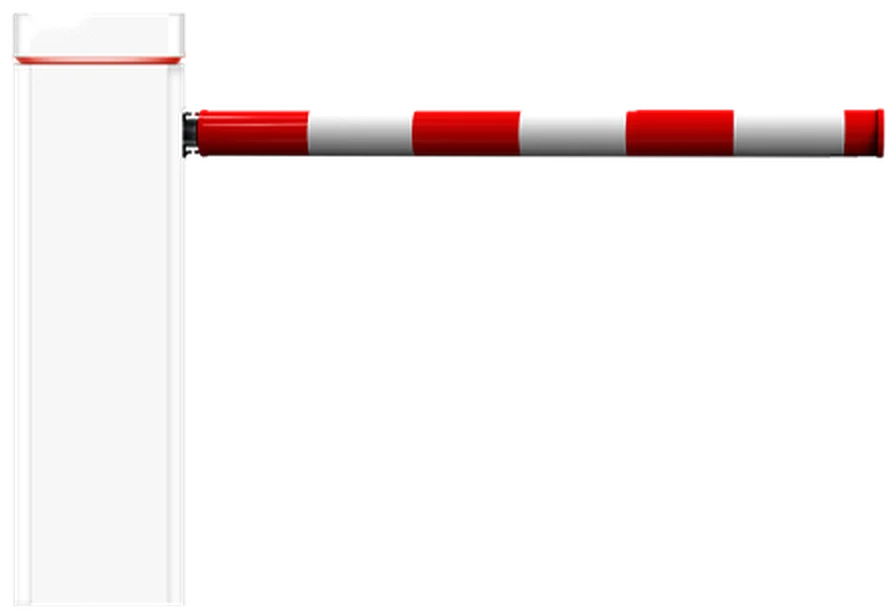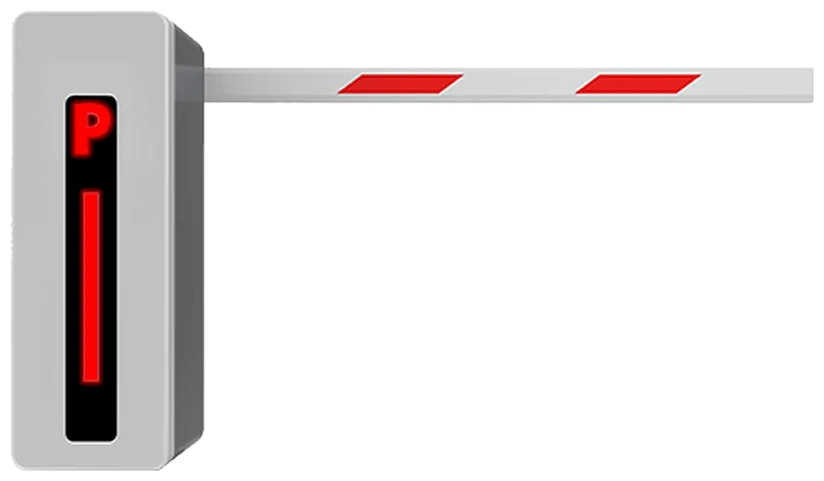
Most cars in India already carry a FASTag on the windscreen for highway tolls. Many housing societies, offices and gated campuses in Gurugram, Noida and Delhi now use that same tag to open the gate. A boom barrier with a FASTag reader lifts automatically for registered vehicles, so residents and staff do not need a separate RFID sticker or a remote. This guide explains how it works, where it fits, and what to check before you buy.
How does a FASTag boom barrier work?
A FASTag is a passive UHF RFID tag. It has no battery; it simply replies with its unique ID when a UHF reader nearby sends a signal. At your gate:
- A long-range UHF reader, mounted on a pole near the barrier, reads the tag ID as the car approaches.
- The access controller checks that ID against the list of registered vehicles for your site.
- If it matches, the controller sends an open signal to the boom barrier, and logs the entry with date and time.
- A loop detector or safety sensor keeps the arm up until the car has fully passed, then the arm closes.
Reading the tag at your gate only reads its ID. It is not a toll transaction and does not take any money from the FASTag wallet. The gate system works on its own list of approved tags.
FASTag boom barrier for a society: is it a good fit?
For a housing society, a FASTag-based gate is often the easiest way to move residents in and out without queues at peak hours. It works well when:
- Most resident cars already have a working FASTag.
- You want to stop issuing, tracking and replacing separate RFID stickers.
- The society wants an entry/exit log of resident vehicles for the security team.
It needs a little more planning when:
- Many vehicles are two-wheelers, which usually do not carry FASTags. Bikes need a separate lane, card, or a guard-operated button.
- Residents change their FASTag often (new bank, damaged tag, new car). Each change means updating the registered list, so the RWA or facility team needs a simple process for this.
FASTag or a separate RFID sticker?
Both use the same UHF RFID technology. The difference is who issues and controls the tag.
- FASTag: no extra sticker or cost per car, and residents already have it. But you do not control the tag; if it is replaced, the vehicle must be re-registered.
- Site-issued RFID sticker: you control issue and cancellation, and the sticker can carry your own numbering. It adds a small cost per vehicle and needs someone to manage stock.
Many sites accept both on the same reader. If you also want photo records of every vehicle, see our guide on RFID vs ANPR for boom barriers.
What to check before buying
1. Reader quality and range
Ask for a UHF reader that works in the Indian band and is rated for outdoor use. Reading range of a few metres is usually enough; too much range can read cars that are only passing by or waiting in the next lane. Placement and antenna angle matter as much as the reader itself, so a site survey is important.
2. The barrier itself
The reader is only half of the system. Check the arm length for your gate width, opening speed, motor duty cycle for heavy traffic, and how the arm behaves on power failure. Our boom barrier buying guide covers arm, speed and motor choices in detail.
3. Safety
- A loop detector under the road or a photo-beam sensor so the arm does not close on a car.
- Anti-crash or breakaway arm options at busy gates.
- Manual release so the gate can be opened during maintenance or power loss.
4. Software and records
Check how vehicles are added and removed, whether you can see entry and exit reports, and whether the system can link with your parking management or visitor management system. Ask who will keep the vehicle list and how quickly a lost or replaced tag can be blocked.
5. Visitors, cabs and deliveries
Visitor FASTags are not on your list, so the barrier will not open for them automatically. Plan a separate visitor lane or a guard button, with a visitor pass or approval from the resident. Some sites log visitor vehicles with an ANPR camera at the same gate.
What affects the automatic boom barrier price?
We do not quote a single figure because the total depends on the site. The main cost drivers are:
- Arm length and barrier type (standard, high-speed, heavy duty)
- Number of lanes (one combined lane or separate entry and exit)
- Reader type and number of readers
- Loop detectors, sensors and civil work for cabling
- Software, reports and integration with other systems
- Warranty and an annual maintenance contract
When comparing quotations, make sure each one includes the same items, so you compare like with like.
Quick checklist
- Count cars and two-wheelers that use the gate at peak time
- Decide FASTag only, site RFID stickers, or both
- Plan separate handling for visitors, cabs and deliveries
- Confirm reader range and placement after a site survey
- Include loop detector or safety sensor and manual release
- Agree who maintains the vehicle list
- Check warranty, spares and local service support
Mapple Infocom supplies, installs and maintains boom barriers with FASTag, RFID and ANPR access for societies, offices and factories in Gurugram and across Delhi NCR. Share your gate width, number of lanes and rough vehicle count, and our team will plan a site survey and send a detailed quotation.
Our engineers can visit your site and recommend the right option. Call +91 97119 00801 or request a quote.