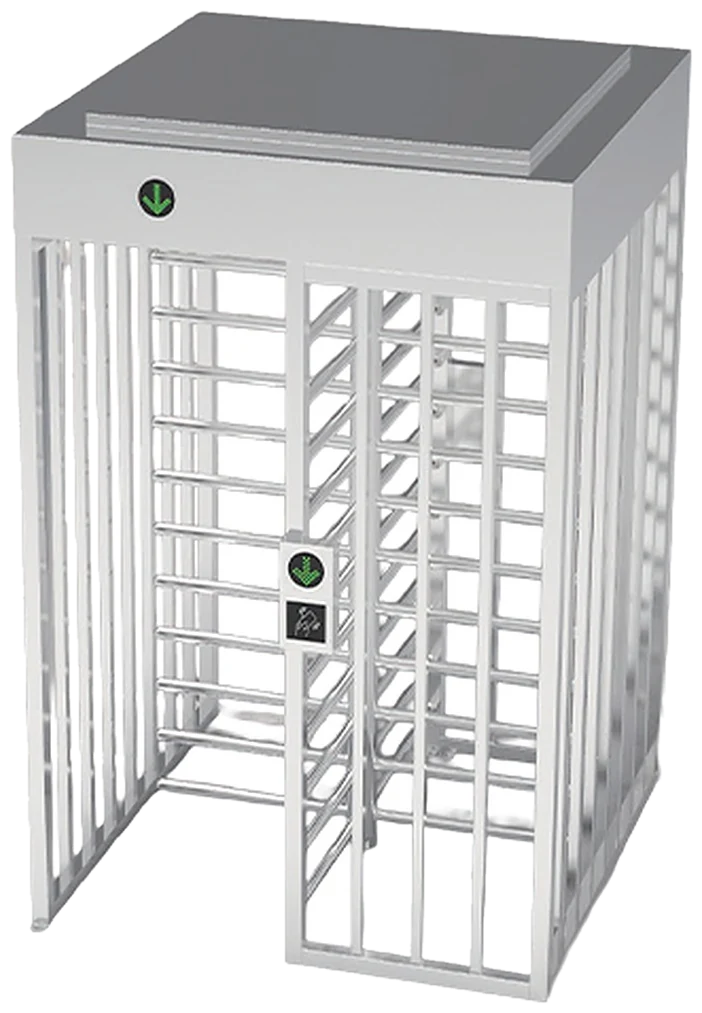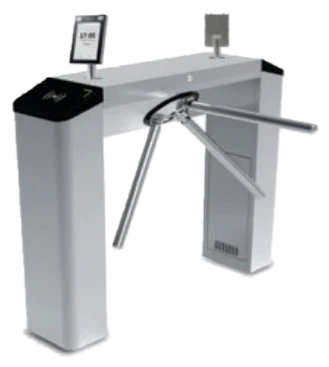
A full height turnstile is a floor-to-ceiling rotating gate that lets one person through at a time. Unlike a tripod turnstile or flap barrier, it cannot be jumped over or crawled under. That is why it is common at factory gates, construction sites, warehouses, stadiums, labour colonies and unmanned perimeter entries. If you are planning one, these are the points to settle before you ask for quotes.
1. Is a full height turnstile the right choice?
Choose a full height turnstile when the entry is on the outer boundary, is often unattended, or when tailgating and climbing over are real risks. It is slower than a flap barrier and looks industrial, so for a corporate lobby a flap barrier or speed gate is usually a better fit. Many sites use both: a full height turnstile at the perimeter gate and flap barriers in the building lobby.
2. Single lane, double lane or with a side gate
- Single lane: one rotor, used for entry, exit or both. Suits small factories and site offices.
- Double lane: two rotors in one frame, usually one for entry and one for exit. Handles shift changes better and saves on a second frame.
- Side gate: a full height turnstile cannot pass trolleys, wheelchairs or material. Plan a separate swing gate or pedestrian door for these, with its own access control.
Count how many people enter in the busiest 15 minutes, usually at shift start. If one lane would create a queue outside the gate, choose a double lane or two units.
3. Material and finish
The two common options are SS304 stainless steel and mild steel (MS) with powder coating. SS304 costs more but resists rust much better, which matters for open-air gates in the monsoon and in chemical or coastal areas. Powder-coated MS is acceptable under a covered canopy. Ask about tube thickness and the drive mechanism, not only the outer finish.
4. Mechanical, semi-automatic or motorised
- Mechanical: a lock and spring return; the user pushes the arms after a valid card or face.
- Semi-automatic: unlocks electrically and self-centres after each pass.
- Motorised: the motor helps turn the rotor, which is easier for users and gives smoother flow.
For busy gates, a motorised or semi-automatic unit with a proper damper is usually worth the extra cost.
5. Safety and emergency release
The most important question is what happens in a power failure or a fire. Most sites need a fail-safe setting, where the rotor turns freely in an emergency, and a link to the fire alarm panel so the turnstile releases automatically. Ask the supplier to show how this is wired and tested. A turnstile on its own is not an emergency exit, so keep a separate evacuation route.
6. Readers and access control
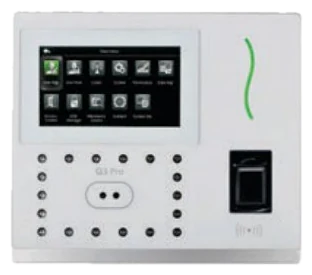
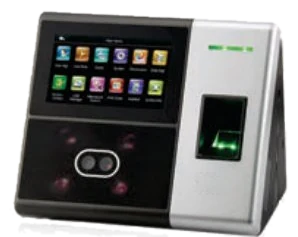
A turnstile is only as useful as the access control behind it. Common reader options:
- RFID cards: lowest cost, but cards can be shared.
- Fingerprint: can struggle with dusty or worn fingers at factories and sites.
- Face recognition: contactless and hard to share; check outdoor and backlight performance.
- QR codes: useful for visitors and contract workers.
Mount readers at a comfortable height and log both entry and exit. The same data can feed attendance and give you a head-count during an emergency.
7. Site preparation
Full height turnstiles need a level concrete base, anchor bolts and cable conduits laid before installation. Outdoor units need a canopy over the readers and electronics, and good drainage so water does not collect at the base. Agree the civil work early, because it is often left out of the turnstile quote.
8. What drives the cost
Price depends on the number of lanes, SS304 or MS, the drive type, the readers and the civil work. As a rough indication only, many SS304 full height turnstiles in India are quoted somewhere around ₹2 lakh to ₹5 lakh per unit before readers, civil work and GST. Single lane mechanical units sit at the lower end and double lane motorised units at the higher end. Always compare quotes on the same specification.
9. Maintenance
A full height turnstile has moving parts that work hundreds or thousands of times a day. Plan for periodic lubrication, bolt tightening, checks of the lock and damper, and reader cleaning. An AMC with defined response times keeps the gate from delaying a shift.
Checklist before you order
- Peak-time head count and number of lanes
- SS304 or MS, covered or open-air
- Drive type and fail-safe behaviour
- Fire alarm link and a separate emergency exit
- Reader type and attendance software
- Side gate for material and wheelchairs
- Civil work, canopy and cabling scope
- Warranty and AMC terms
Our engineers can size the turnstile, readers and side gate during a free site survey in Gurugram and Delhi NCR.
Our engineers can visit your site and recommend the right option. Call +91 97119 00801 or request a quote.